
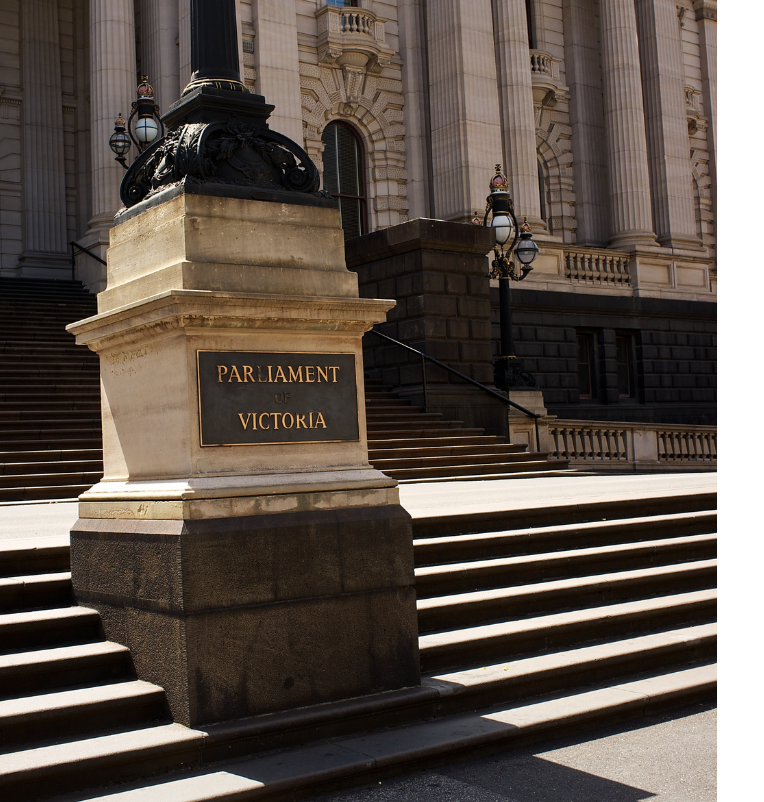
What we're asking candidates about this Vic election
Next month Victorians will be asked to vote for representatives to guide our state's direction for the next four years, and beyond.
When it comes to the issues Fair Agenda advocates on - women's safety, economic security, healthcare and agency - there's a lot at stake.
That's why we're tracking where the candidates asking for your vote stand on key gender justice issues. Shaped by members' responses to our recent survey - we're tracking candidate commitments in six key policy areas.
Those are:
1. Protecting and improving access to abortion
Everybody should be able to get timely and affordable access to the healthcare they need and to make decisions about their health, family and future with dignity and support. But right now, a Victorian’s access to abortion care too often depends on where they live and what they earn. For women in regional and remote communities the shortage of abortion care providers can mean long journeys, delayed care and additional cost.
In recent years certain politicians in multiple states have tried to restrict our abortion laws. And because many parties’ treat votes on abortion law as personal ‘conscience’ vote issues, MPs often vote individually, rather than being bound by the party or leader’s position. That’s why we’re asking candidates their personal stance on abortion laws, as well as whether their party would support improving access to abortion services.
2. Improving women’s access to specialty safety services
We all deserve to be and feel safe wherever we live, gather, work or play. Yet current government funding priorities mean that specialist domestic, family and sexual violence services are under-resourced, limiting their ability to provide timely, specialist support to victim-survivors who need them.
We're asking candidates whether they'll commit to resourcing the specialist services that keep victim-survivors safe, and support healing and recovery.
3. Improving supports for victim-survivors
Victorians expect a justice and health system that responds swiftly, compassionately and effectively to the needs of survivors of sexual assault and domestic violence. Yet rules and processes set by our government mean many victim-survivors are caused additional harm by systems that should support their recovery.
Victorian survivors face barriers to accessing forensic medical examinations, are forced to wait years before they can give testimony for court, and have to navigate a system that responds to an Aboriginal woman’s reports of violence by removing children, over supporting women’s safety.
We're asking candidates if they'll pass reforms to stop this harm; and resource the infrastructure and specialist services that support healing and recovery.
4. Resourcing caring communities
Most of us share a vision of a Victoria with quality services that care for our people - wherever we live, and whatever we’re going through.
But for decades, too many politicians have made decisions that benefit big business and their mates; while we’re paying more for essentials, and the services we need are getting harder to access.
The next Parliament must fund the basic services and care that our communities deserve and ensure there are supports available for women in the moments we need them most.
5. Ensuring affordable and safe homes
Safe, secure housing is essential to women’s safety and equality. For victim-survivors of family violence, including children and young people, housing insecurity can force an impossible choice between remaining in an unsafe home and leaving without a secure place to live. Rising rents, inadequate social housing and insecure tenancies disproportionately affect women experiencing family violence and financial insecurity.
We're asking candidates if they'll increase the supply of social housing, strengthen protections for renters, and ensure victim-survivors can leave unsafe homes without facing homelessness, financial hardship or discrimination.
6. Maintaining Treaty
As women know well - we all do better when we’re free to make decisions for ourselves.
Victoria’s Treaty puts First Nations people in the driver’s seat when it comes to policies and decisions that impact them. It is a way of acknowledging the harm and injustices of the past, bringing communities together, and working out how to create a better and fairer future that everyone can benefit from. It makes sure Aboriginal people have the power to design solutions that work for their communities across a range of barriers - including women’s safety and equality.
That's why we're asking candidates if they'll honour and sustain Victoria's landmark Treaty legislation.
You can read the specific questions we're asking all candidates on behalf of Fair Agenda members by clicking the drop down below. To make sure you receive updates from Fair Agenda about candidates' responses to these questions, make sure you're signed up as a Fair Agenda member - you can join here.
Click here to view the full list of survey questions we're sending to parties and candidates.
Section 1. Protect and improve access to abortion
Q1) Will you personally vote to protect Victoria’s current abortion laws from amendments that would restrict or undermine access to abortion care (including safe access zones at clinics)?
Q2) Will you and your party support funding to protect access to abortion care - including sustaining funding for services like women’s sexual reproductive health hubs and women’s health clinics that are due to lapse in June 2027?
Q3) Will you and your party support increased investment to improve access to abortion care, especially for people in remote and regional Victoria?
Section 2. Improve women’s access to specialist safety services
Q1) Will you support sustainable investment in the specialist family violence sector, through a sustained uplift to $554 million per year from 2026-27, delivered through five year funding agreements, as recommended by Safe + Equal?Q2) Will you support increased, long-term and flexible funding to maintain and extend the work of frontline sexual violence services as recommended by Sexual Assault Services Victoria?
Q3) Will you support the establishment of Djirra’s Aboriginal Women’s Centre to support women and children’s access to safety, justice, healing and community.
Q4) Will you support providing increased and dedicated funding for family safety contact and advocacy work to ensure availability for all victim-survivors of men taking part in Men’s Behaviour Change Programs (MBCPs), including current and ex-partners, children, parents and child victim-survivors? (Family Safety Contact and Advocacy Work refers to victim-survivor supports within MBCPs to help ensure the safety and needs of affected family members are met)
Q5) Will you support investing $17.1 million in Women’s Legal Service Victoria to deliver four additional rounds of their Emerging Lawyers Program, training 60 early career lawyers to provide free specialist legal assistance to more than 12,000 people impacted by family violence across regional and outer metropolitan Victoria.
Section 3. Improve supports for victim-survivors
Q1) Victoria’s current family violence strategy ends in 2027. The next government and parliament need a clear commitment to what comes next. Will you support the development of a new 10-year strategy to end family violence, and the creation of a dedicated strategy to address sexual violence?
Q2) Will you support expanding access to ‘just-in-case’ forensic medical examinations so that regardless of where a survivor of sexual violence is in Victoria, they can have evidence collected in the small window of time available without having to travel for hours, while deciding whether to report to police?
Q3) Will you support legislative reforms to allow victim-survivors of sexual assault to pre-record their full testimony at a special hearing, in line with recommendation 28 of the ALRC justice responses to sexual violence report?
Q4) Will you improve court responses to victim-survivors of sexual assault by investing in the infrastructure needed to enable them to pre-record their full testimony at a special hearing?
Q5) Will you support the establishment and resourcing of a Child Protection Notification and Referral System as recommended by Djirra? (This would ensure that Aboriginal women are immediately referred to culturally safe legal advocacy and wraparound support if Child Protection becomes involved when they report family violence).
Q6) Will you implement Yoorrook’s Recommendation 27 by establishing a properly resourced, independent police oversight authority, with the power to independently investigate complaints about police misconduct – so victim-survivors can safely seek accountability?
Section 4. Resource caring communities
Q1) Will you support funding the true cost of vital community services, by ensuring government funding agreements include the cost of wage increases ordered by the Fair Work Commission’s gender undervaluation review of the Social, Community, Home Care and Disability Services (SCHADS) Industry Award and other priority awards?
Q2) Will you support resourcing to sustain the capacity of women’s health infrastructure in Victoria? Specifically extending the current investment (due to lapse in June 2027) for women’s health clinics, women’s sexual reproductive health hubs, Aboriginal women’s health clinics and the statewide network of women’s health services, and making their funding a permanent part of the health system?
Q3) Will you support investment to develop and expand our community services (including support workers, case workers, allied health workers, counsellors and early educators) - by introducing a paid student placements model that supports both students and the community services that host them, based on a ‘per-placement-day’ fee?Section 5. Ensure affordable and safe homes
Q1) Will you support building 80,000 new social homes over the next decade through dedicated growth in both public and community housing stock?
Q2) Will you support action to limit rental stress by both:
1. continuing to cap the frequency of rent increases, And
2. charging the Essential Services Commission with developing a Rent Increase Fairness Formula for private rental housing?
Q3) Will you support building on existing family violence provisions in the Residential Tenancies Act to expand legal protections against discrimination, financial loss, and risk of eviction?
Q4) Will you support delivering liveable and affordable homes for renters, by completing the full rollout of the new Minimum Energy Efficiency Standards for private rentals, public housing and community housing as scheduled?
Q5) Will you support updates to Victoria’s emergency relief and recovery programs to reflect the impacts of a changing climate and the impacts of the housing crisis? Specifically - expanding programs and eligibility for emergency relief payments to renters so they can access support to remain in their communities.
Section 6. Maintain Treaty
Q) Will you honour and sustain Victoria’s landmark Treaty Legislation and resource and empower Gellung Warl to continue acting in their role as the First People’s representative body?


 1
1